If you’re a recruiter or engineering manager scanning backend developer portfolios, you’ve probably noticed a pattern.
Many sites list:
A stack (Python, Django, FastAPI)
A few screenshots
A GitHub link
And vague claims like “scalable” or “production-ready”
But very few explain how those systems were built, why certain decisions were made, or whether the developer understands real-world constraints like performance, security, and growth.
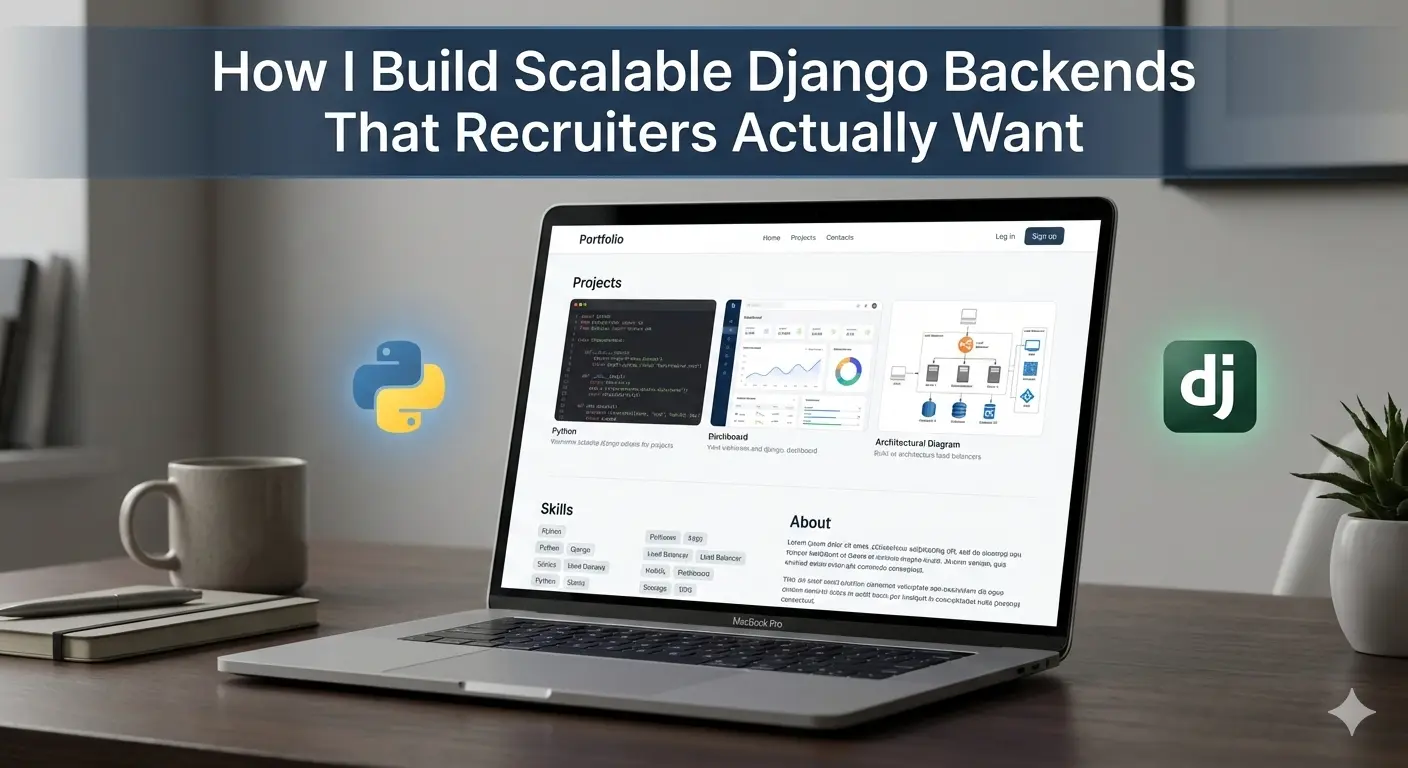
This article breaks down how I approach backend development using Python, Django, and FastAPI, and why my portfolio focuses on real, permission-approved client projects instead of toy demos.
If you’re hiring or if you’re a developer trying to stand out this will show what production-ready backend work actually looks like.
My Backend Philosophy: Build for Growth, Not Just Launch
I design systems with one assumption:
If it works today, it must still work when traffic doubles, features expand, and business rules change.
That philosophy shapes every decision I make.
What “Scalable” Actually Means in Practice
Scalability isn’t just about handling traffic. It includes:
Clean architecture that supports new features
Data models that don’t collapse under growth
APIs that remain stable as clients increase
Admin workflows that don’t require manual hacks
This is why most of my work is backend-first the foundation determines everything else.
My Core Stack (And Why I Use It)
Python
Python gives me:
Fast development cycles
Readable, maintainable code
A massive ecosystem for automation, AI, scraping, and APIs
Django
Django is my go-to framework for:
Why?
FastAPI
I use FastAPI when:
It pairs perfectly with Django when separation of concerns is needed.
Architecture: How I Structure Real Applications
Recruiters often ask: “How do you structure your projects?”
Here’s the answer intentionally and modularly.
Typical Django Architecture
Apps by domain, not features dumped into one app
Clear separation of:
Models
Services
Views / APIs
Permissions
Reusable utilities and helpers
Environment-based settings (dev, staging, production)
This allows:
Database Design: Thinking Beyond Tables
A backend is only as strong as its data model.
I design schemas with:
For example:
Audit logs are separated from core tables
Usage tracking is abstracted for analytics
Soft deletes are used where compliance matters
This is especially important in:
Security Is Not Optional
Security is baked in from day one.
What I Always Implement
Role-based access control
Permissions at both view and object level
CSRF & XSS protection
Rate limiting for APIs
Environment variable secrets
Secure file handling
For client-facing systems, this prevents:
Real Projects, Not Theory
Most projects in my portfolio are:
This matters because:
Real users break assumptions
Real traffic exposes bottlenecks
Real businesses change requirements
You can explore these projects directly here:
👉 https://kingsleyodume.online/
What Recruiters Should Look For in a Backend Developer
If you’re hiring, here’s what actually matters:
Can they explain trade-offs?
Do they understand scale beyond localhost?
Can they design systems that others can maintain?
Have they handled real users and real failures?
This is why my portfolio prioritizes depth over quantity.
Why I Document My Work Publicly
I treat my portfolio as:
Every project answers:
Final Thoughts: Building Systems That Outlast Trends
Frameworks change.
Buzzwords fade.
But good backend architecture lasts.
If you’re a recruiter looking for a backend developer who understands production realities, or a founder needing systems that won’t collapse under growth, you can explore my work here:
👉 https://github.com/KingsleyOdume
If you’d like to discuss:
Feel free to reach out through my portfolio.